FOUNDING STEWARDS Who carries the work

People

UMARNA is built through circles of inquiry, roundtables and a wider network of collaborators who come together around questions, research areas and projects. Researchers, practitioners, scientists, archaeologists, technologists, artists, designers, philosophers, educators and knowledge holders enter the work where their particular expertise is relevant.

These circles are not a fixed faculty. They provide a setting in which specialised knowledge, experience and long-term practice can meet around the work itself.

FOUNDING STEWARDS

A circle, holding coherence.

The founding stewards hold the initial architecture of the institute; its wider intellectual life develops through the people who contribute to it. A collaboration may be brief or long-term, depending on the work, and can bring scientific expertise, technical skill, cultural knowledge, artistic practice, institutional experience or a long relationship with a place.

Different forms of authority remain distinguishable. Scientific expertise, technical competence, cultural custodianship, lived experience and institutional responsibility answer to different obligations. UMARNA allows them to inform one another while keeping those obligations visible.

The founding architecture is intended to outlast individual founders. Continuity is therefore part of the design: the institute should be able to accumulate knowledge, develop new collaborations and remain intellectually active as its people and projects change.

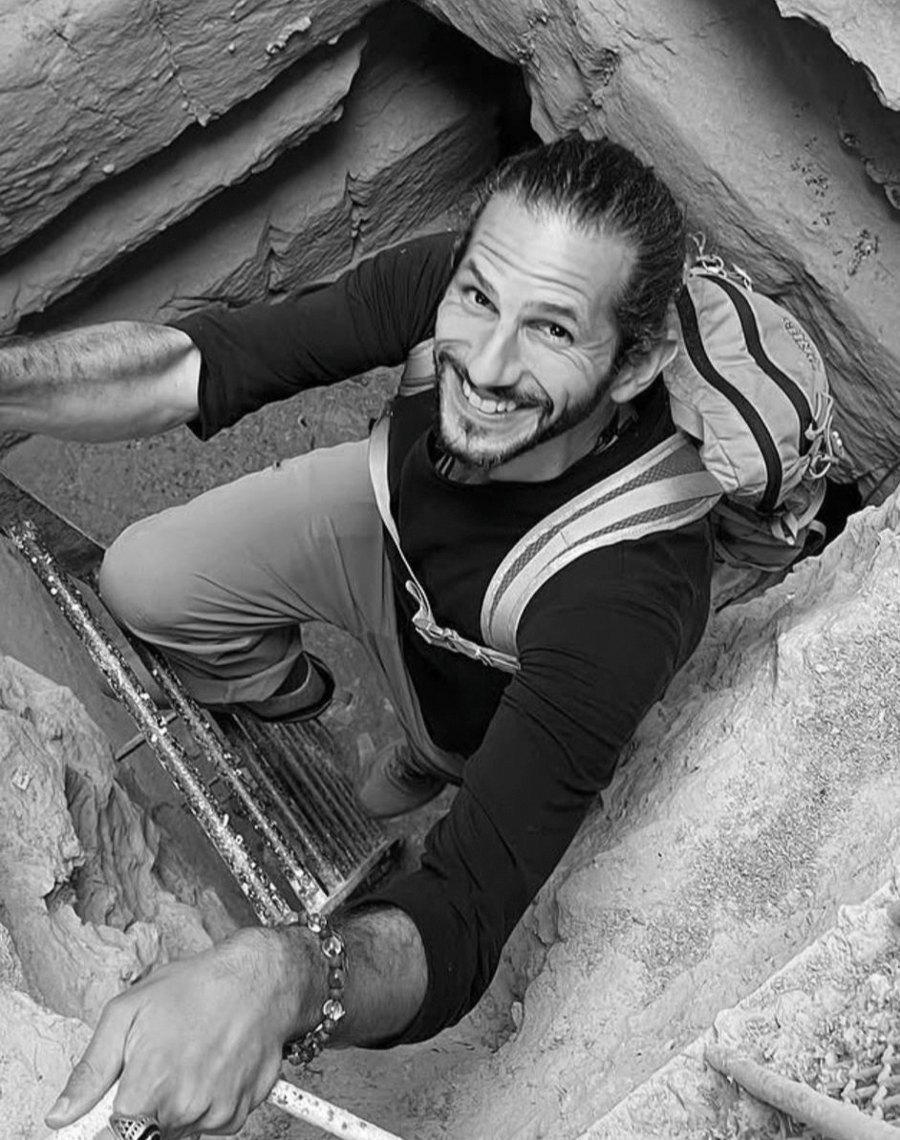
Portrait of Rishaar
Steward 01I of III

Rishaar Richard Gazzo

Trained as an astrophysicist in France, he then spent half his life in Japan, where Eastern philosophy and a different relationship with the natural world, one that begins from interconnection, reshaped what he considered observable. Out of that double formation came Geosophia, the discipline he founded to read the Earth as a living, coherent system and to bring people back into relationship with it. Its premise is that the full spectrum belongs in the inquiry, instrument measurement and knowledge carried by lineage alike, and that holding both to one standard of objectivity is what keeps the reconnection honest. At UMARNA that conviction becomes structure: he builds the instruments that let separate disciplines be compared on one map, the research systems that keep every finding attached to the strength of its evidence, and the governance that holds knowledge in trust. What he is working toward is coherence, between what we can measure, what we have inherited, and the living planet that carries both.
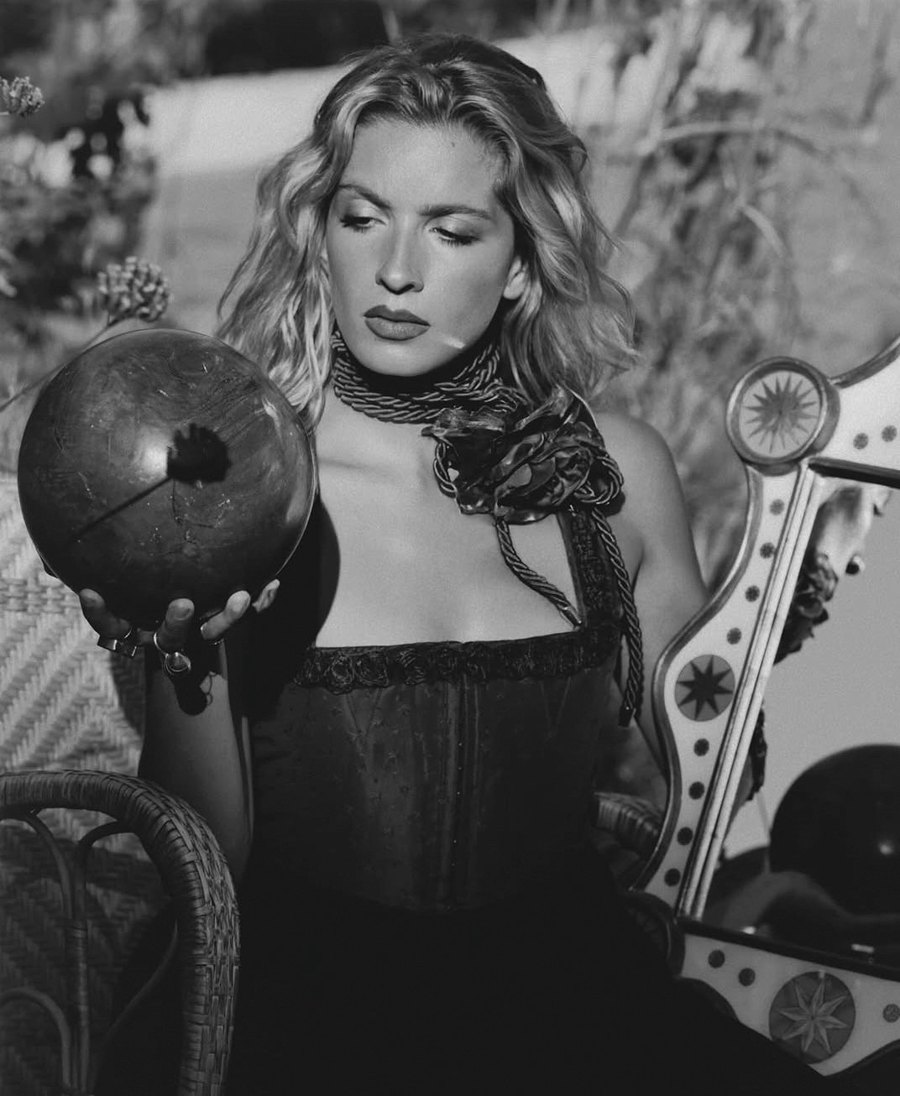
Portrait of Mafe
Steward 02II of III

Mafe Mafe Maldonado

An architect of worlds exploring the invisible structures that connect matter, consciousness, and the cosmos. Her research unfolds across art, philosophy, architecture, and ancient wisdom, driven by a fascination with the fundamental mysteries of existence and humanity’s enduring impulse to give them form. From the temples and cosmologies of Ancient Egypt to the symbolic languages of forgotten cultures, she investigates how civilisations have translated their understanding of reality into geometry, ritual, space, symbolism and collective imagination. For her, creativity is a philosophical act, a means of navigating the unknown and transforming abstract ideas into tangible experiences. Through architecture, artistic interventions, and experimental environments, she explores the capacity of space to alter perception, evoke memory, and establish new relationships between the individual and the unknown. Her practice approaches creation as an ongoing dialogue between the visible and the invisible, the inherited and the unimaginable, questioning what architecture might become when conceived as an instrument of human transformation.

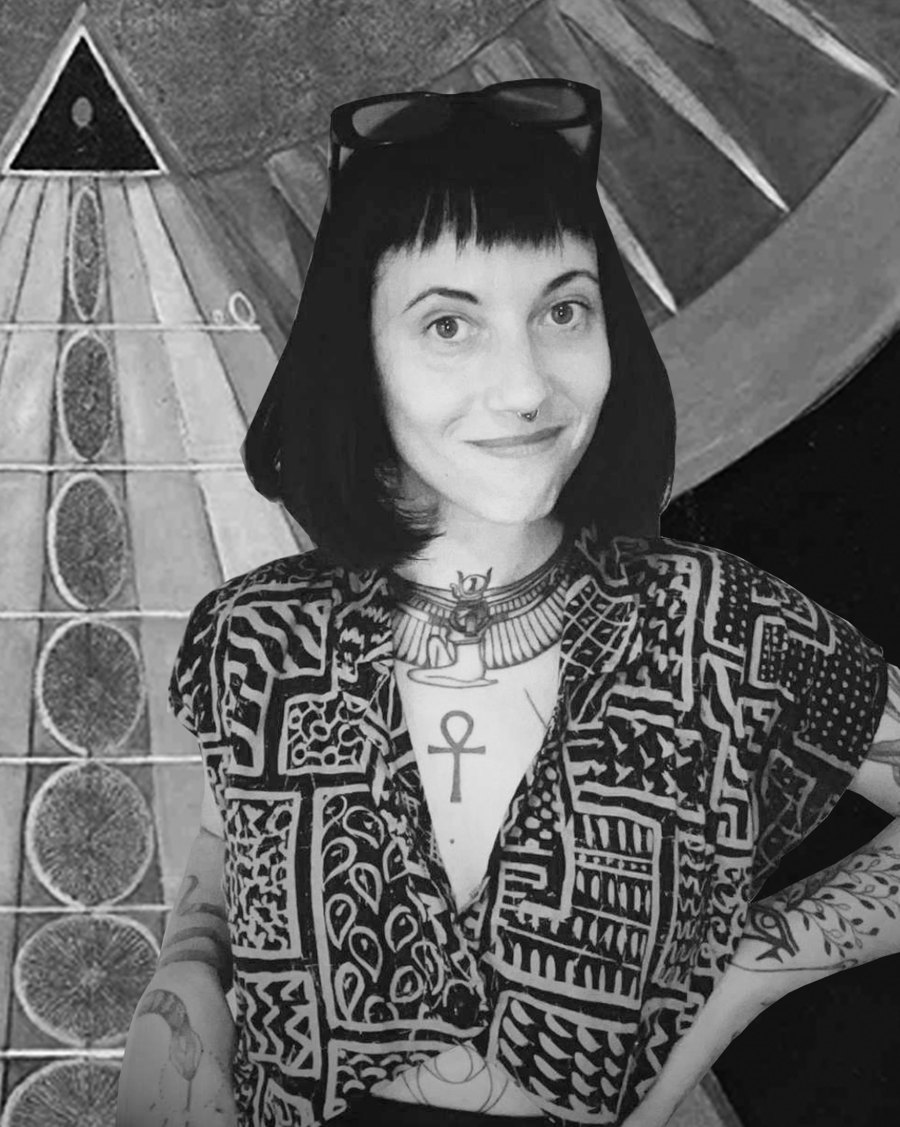
Portrait of Gaby
Steward 03III of III

Gaby Gabriela Zephilov

Transdisciplinary researcher, writer and creator whose path has been shaped by art, nature and science. Her curiosity traverses time and technology, tracing the liminal space where physics meets philosophy, sound reveals geometry and the lattice of recurring chemical patterns extends across scales. Drawn to the origins of life and knowledge, she fell in love with ancient civilizations as a child, upon inheriting pieces and fragments of an old Egyptian altar. Her work explores cultural memory, the underlying principles of creation and the generative tension of paradox, questioning the deepest assumptions about what we conceive as real. Through language, light, chromatic scales and composition, inquiry can take the form of literature, transmedia experiences, art installations or experimental devices — inspiring regenerative approaches to how we learn, perceive and organize our social systems. Design and engineering become part of her pursuit of beauty and harmony, preparing the conditions for syntropic creation to emerge — to play the game with the freedom to rewrite the myths that limit the way we live.

The wider circle

The institute grows by relationship.

The institute is growing a network of researchers and practitioners who lend their expertise without giving up their independence.
We are on the side of the planet, never on the side of any person, funder or programme. This orientation, more than any credential, is what makes the circle a circle.

Join the Wider Circle

The circle is drawn from a wide field

  • Ecology
  • Contemplative traditions
  • Indigenous knowledge
  • Science
  • Technology
  • The arts
  • Philosophy
  • Education
  • Archaeology
  • Clinical practice